

Gastropexy (Bloat Prevention) for Pets in Fort Lauderdale, FL
Bloat can go from undetectable to life-threatening within hours. One morning a dog may seem perfectly fine, and by afternoon the same dog may be in a medical crisis that demands immediate surgery. For large and deep-chested breeds, this risk is not a remote concern but a real part of life, and many owners find themselves searching for answers only after a scare. A preventive procedure called gastropexy changes that equation in a meaningful way, giving at-risk dogs a much better chance of avoiding the most dangerous phase of this condition altogether.
At Bluewater Animal Health Center, Dr. Alex Emerson takes the time to walk Fort Lauderdale pet owners through exactly what their dog faces and why a surgical option may be worth considering before an emergency happens. After 15 years as a performance horse veterinarian, Dr. Emerson brought a lifelong commitment to learning and clear communication into small animal medicine. His approach is built around listening first and giving direct answers second, and that philosophy carries through every conversation about soft tissue surgery at our soft tissue surgery practice.
What Is Gastric Dilatation-Volvulus (GDV)?
Gastric dilatation-volvulus, commonly called bloat or GDV, occurs when a dog’s stomach fills with gas and then twists on itself. That twisting cuts off blood flow to the stomach and surrounding organs, and without immediate intervention, the condition can be fatal within hours. While large, deep-chested breeds carry the highest lifetime risk, including Great Danes, German Shepherds, Standard Poodles, Doberman Pinschers, and Weimaraners, any dog is potentially susceptible.
The recurrence numbers alone make a compelling case for prevention. According to research published in PubMed Central through the National Institutes of Health, GDV recurs in up to 80% of affected dogs that do not undergo surgical intervention, compared to a recurrence rate of less than 5% in dogs that do. That gap is the reason preventive gastropexy has become such an important tool in caring for at-risk breeds.
Up to 80%
GDV recurrence rate in dogs without gastropexy
<5%
Recurrence rate in dogs that have had gastropexy
Hours
Window for intervention before GDV becomes fatal
What a Gastropexy Does
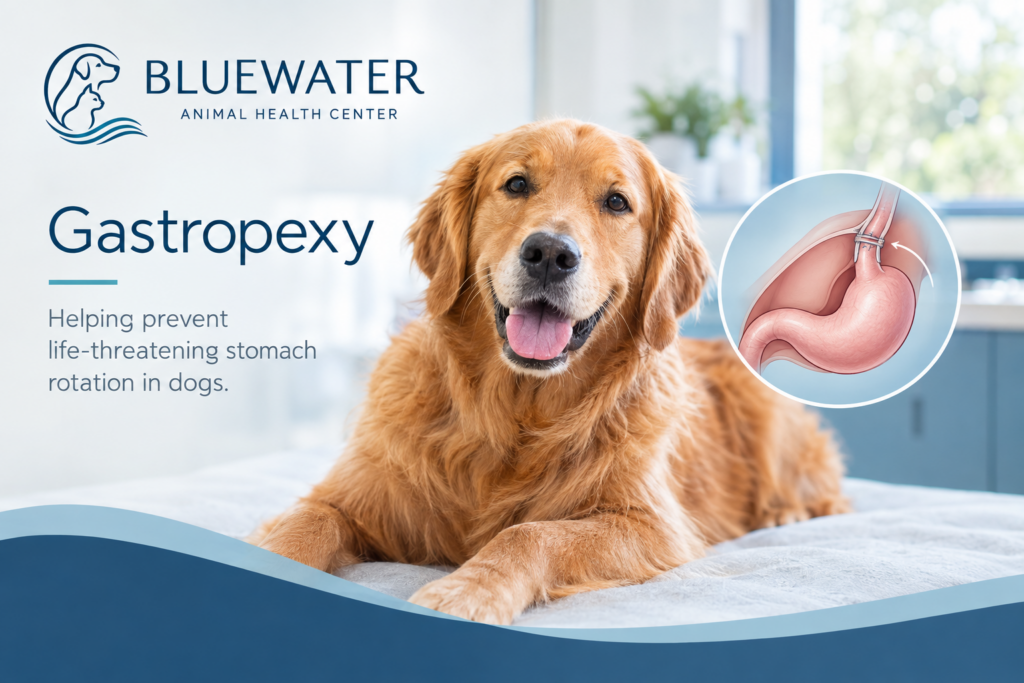
A gastropexy is a surgical procedure that secures the stomach to the abdominal wall, preventing it from twisting even if gas accumulates inside it. The procedure does not prevent a dog’s stomach from filling with gas, but it eliminates the volvulus component, which is the dangerous twisting that can rapidly become a surgical emergency.
During the procedure, our team creates a small, permanent attachment between the stomach and the inner wall of the abdomen, allowing the stomach to stay anchored in its normal position. Many pet owners choose to schedule gastropexy at the same time as a spay or neuter, because the dog is already under anesthesia and recovery is minimized with the combined approach. For dogs that have already experienced a GDV episode, or for older dogs at elevated risk, we evaluate timing based on each animal’s individual health and history.
Which Dogs Benefit Most from Preventive Gastropexy?
Breed and body type are the two strongest predictors of GDV risk, but several other factors can also raise the likelihood of an episode. We evaluate each dog individually, and the following characteristics often come up in that conversation:
Breed & Build
Large or giant breed dogs with deep, narrow chests are at the highest lifetime risk.
Family History
A prior GDV episode in the dog or its relatives significantly raises the risk of recurrence.
Eating Habits
Dogs that eat quickly or consume large meals in one sitting face a higher likelihood of bloat.
Anxious Temperament
High-strung or anxious dogs have been associated with higher rates of GDV across breeds.
Age
Risk tends to climb with age, making earlier preventive conversation more valuable.
We do not apply a blanket recommendation to every breed on this list. Instead, we look at the full picture, weighing age, existing health conditions, and whether the dog has shown any prior signs of gastric distress before determining whether gastropexy makes sense.
Signs of Bloat to Watch For
Even with a gastropexy in place, knowing the signs of bloat matters, because the procedure prevents twisting but not the initial gas buildup. If any of the following appear, especially in combination, treat it as an urgent situation that requires immediate evaluation.
Swollen Abdomen
A visibly distended or firm belly, often appearing suddenly.
Unproductive Retching
Attempts to vomit that produce nothing or very little.
Restlessness
Pacing, inability to get comfortable, or obvious distress.
Excessive Drooling
More saliva than usual, often alongside other signs.
Weakness or Collapse
Sudden weakness, inability to stand, or loss of responsiveness.
Our team sees urgent cases and will help you determine next steps as quickly as possible, or guide you toward an emergency facility if the situation calls for it. Time matters significantly with this condition, and acting quickly gives a dog the best possible outcome.
How We Approach Gastropexy at Bluewater Animal Health Center
Surgical decisions require more than a procedure overview, and we know pet owners want to feel confident in a recommendation before agreeing to it. Dr. Emerson’s approach is to explain the reasoning behind a recommendation rather than simply issue one. That means walking through the specific risk factors that apply to your dog, the expected recovery, and what to realistically expect afterward.
We also consider the full context of your dog’s health. A gastropexy consult is not a standalone conversation but part of a broader picture that includes preventive wellness habits, age-related concerns through our senior wellness program, and any ongoing conditions related to mobility and comfort. We serve pet owners throughout Fort Lauderdale and surrounding communities, including Wilton Manors, Oakland Park, and Dania Beach, and we bring the same level of attentive, informative care to every appointment.
Is Your Dog at Risk for Bloat?
Dr. Emerson is glad to review your dog’s breed, age, and health history and tell you whether preventive gastropexy makes sense.
Schedule a Gastropexy Consultation at Bluewater Animal Health Center
Bluewater Animal Health Center combines Dr. Emerson’s decades of veterinary experience with a genuine commitment to the well-being of every patient and every pet owner who walks through our doors. Dr. Emerson built this practice on the belief that clear communication leads to better outcomes, and we carry that through every surgical consultation we provide. Gastropexy is one of the most consequential preventive procedures we offer precisely because of how much it can reduce the risk of a true emergency.
If your dog falls into a higher-risk category, or you simply want a clearer picture of what gastropexy involves before deciding, we are glad to talk it through in detail. Reach out through our contact form to schedule a consultation, and we will help you determine whether preventive gastropexy is the right step for your dog’s breed, age, and overall health.