

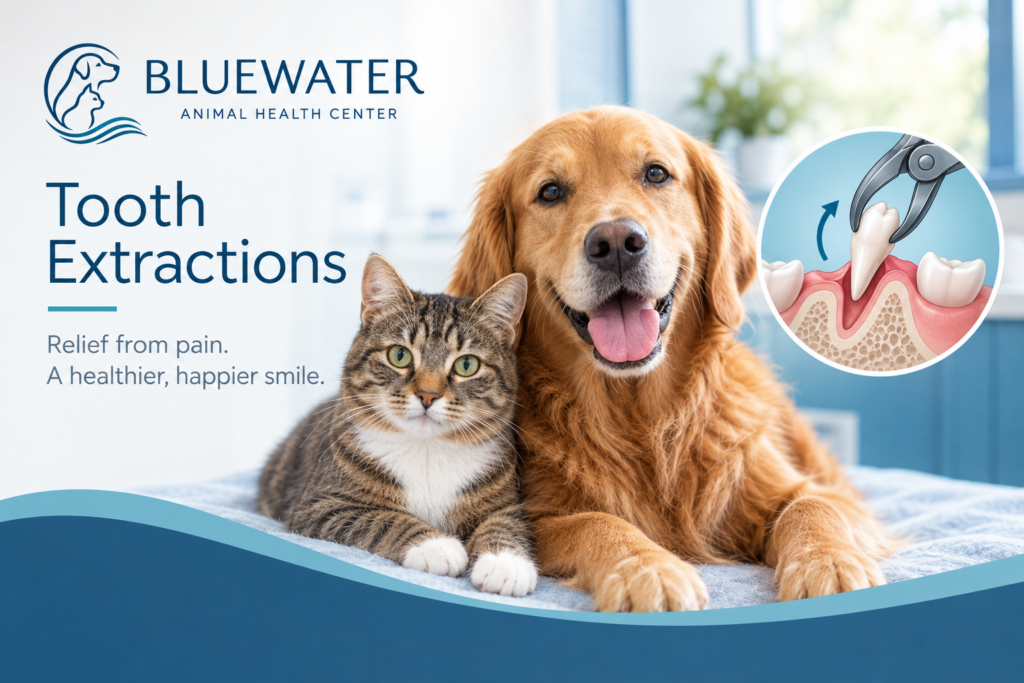

Tooth Extraction for Pets in Fort Lauderdale, FL
Dogs and cats are remarkably good at hiding dental pain. Many pets continue eating and playing even when a fractured tooth, infected root, or advanced gum disease is causing them significant discomfort. By the time visible signs appear, such as dropping food, bad breath, or swelling near the jaw, the underlying condition has often progressed to the point where extraction is the safest, most humane path forward. Waiting rarely makes the situation simpler.
At Bluewater Animal Health Center, Dr. Alex Emerson approaches tooth extractions the same way he approaches every visit: listening carefully, explaining clearly, and building a treatment plan that makes sense for each individual pet and their family. For Fort Lauderdale pet owners navigating a dental diagnosis, our goal is to make every step of this process, from evaluation through recovery, feel manageable and well understood.
When Tooth Extraction Becomes Necessary
Veterinarians try to save a tooth whenever it is possible to do so safely. However, several conditions make extraction the better choice for long-term comfort and health. The most common reasons include severe periodontal disease with bone loss, fractured teeth that expose the pulp, persistent root infections, and tooth resorption, a condition that is particularly common in cats.
Left untreated, these conditions allow bacteria to spread well beyond the mouth. According to the American Veterinary Medical Association (AVMA), periodontal disease affects nearly 80% of dogs and 70% of cats by the age of three, and problems found in association with untreated disease include kidney, liver, and heart muscle changes. Early detection and treatment are critical because advanced disease can cause severe pain and systemic health consequences.
~80%
of dogs affected by periodontal disease by age 3
~70%
of cats affected by dental disease by age 3
Most
pets show no obvious signs until disease is advanced
Source: American Veterinary Medical Association, 2026
Signs Your Pet May Need a Tooth Extraction
Because pets rarely display obvious pain, families often notice subtler changes first. Any of the following can point toward a tooth or dental condition that needs evaluation.
🖴 Bad Breath
Persistent foul odor is often the first sign of active infection or gum disease.
🍄 Dropping Food
A pet that drops food or chews only on one side may be avoiding a painful tooth.
🩹 Red or Bleeding Gums
Inflammation, swelling, or bleeding along the gumline signals periodontal disease activity.
🐾 Facial Swelling
Swelling near the jaw or under the eye can indicate an abscess or bone loss around a tooth root.
😏 Behavior Changes
Becoming withdrawn, less playful, or irritable when touched near the mouth often signals oral pain.
🦳 Visible Tartar or Loose Teeth
Heavy tartar buildup or a visibly loose tooth may indicate significant disease below the gumline.
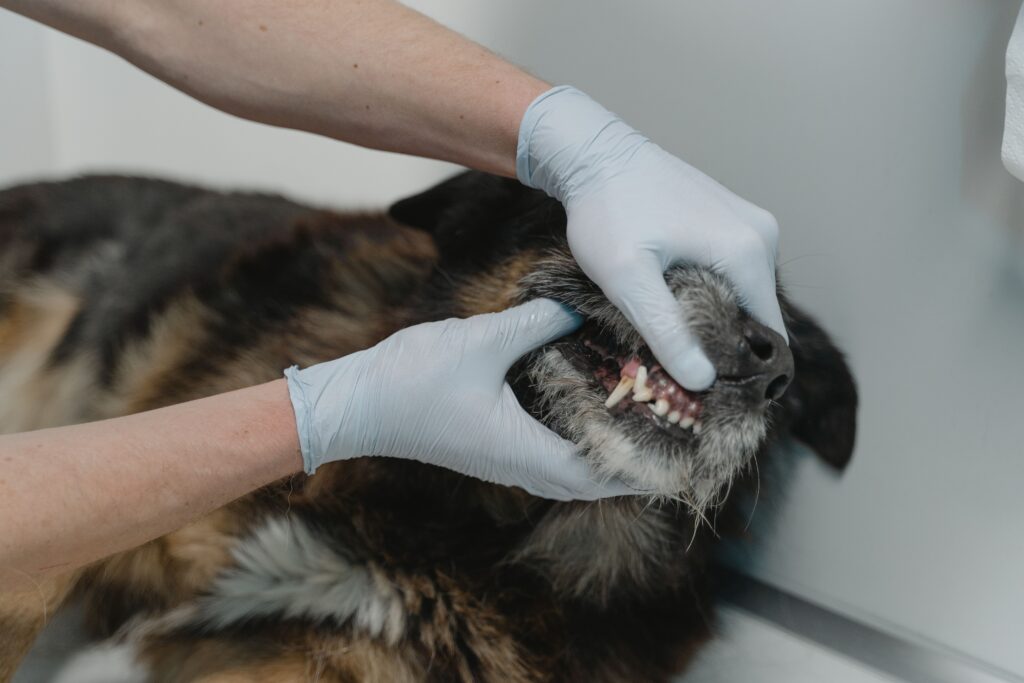
A thorough oral exam, typically performed under anesthesia with dental radiographs, is the only reliable way to determine whether a tooth can be saved or needs to be removed. Radiographs allow us to see below the gumline, where a significant amount of disease can progress even when the visible crown of the tooth appears relatively normal.
How the Extraction Procedure Works
All tooth extractions at Bluewater Animal Health Center are performed under general anesthesia. This protects your pet from pain and keeps them completely still, which is essential for precision and safety. Before any procedure, we run pre-anesthetic bloodwork to confirm your pet is a good candidate, and we monitor vital signs closely from induction through the recovery room.
1
Pre-Anesthetic Exam and Bloodwork
We evaluate your pet’s overall health and run labwork to confirm they are a safe anesthesia candidate before scheduling any procedure.
We evaluate your pet’s overall health and run labwork to confirm they are a safe anesthesia candidate before scheduling any procedure.
2
Dental Radiographs Under Anesthesia
Once your pet is safely under anesthesia, we take full-mouth dental X-rays to evaluate tooth roots, surrounding bone, and any hidden disease below the gumline.
Once your pet is safely under anesthesia, we take full-mouth dental X-rays to evaluate tooth roots, surrounding bone, and any hidden disease below the gumline.
3
Extraction with Vital Sign Monitoring
We carefully remove the affected tooth or teeth using precision dental instruments, while a dedicated team member monitors your pet’s heart rate, blood pressure, and oxygen saturation throughout the procedure.
We carefully remove the affected tooth or teeth using precision dental instruments, while a dedicated team member monitors your pet’s heart rate, blood pressure, and oxygen saturation throughout the procedure.
4
Site Closure and Pain Management
Extraction sites are typically closed with dissolvable sutures, and we send every patient home with a tailored pain management plan designed around their size, age, and procedure complexity.
Extraction sites are typically closed with dissolvable sutures, and we send every patient home with a tailored pain management plan designed around their size, age, and procedure complexity.
5
Recovery and Aftercare Instructions
Your pet is monitored in recovery until they are stable and comfortable. Before discharge, we walk you through exactly what to expect at home and what to watch for during healing.
Your pet is monitored in recovery until they are stable and comfortable. Before discharge, we walk you through exactly what to expect at home and what to watch for during healing.
What Recovery Looks Like at Home
Most pets recover quickly from tooth extractions and are back to their normal behavior within a few days. A handful of simple steps during that window help protect the extraction site and support healing.
- Offer soft or moistened food for several days to avoid irritating the extraction site.
- Follow the pain management plan we send home, even if your pet seems comfortable.
- Watch for excessive swelling, active bleeding, or a foul odor from the mouth, and call us if any of these appear.
- Avoid letting your pet chew on hard toys or treats until we confirm the site has healed.
Many families are surprised by how quickly a previously uncomfortable pet returns to eating well, playing, and acting like themselves again once the source of pain is gone.
Which Pets Are at Higher Risk for Dental Disease
Some pets develop dental disease more rapidly based on breed, body structure, or life stage. Small-breed dogs and brachycephalic breeds, such as French Bulldogs and Pugs, are particularly prone to crowded, misaligned teeth that trap debris and accelerate periodontal disease. Senior pets of any breed benefit from regular oral health evaluation as part of their senior wellness care, since dental disease tends to compound over time when left unaddressed.
This is one reason we incorporate oral health assessment into routine preventive wellness visits rather than waiting for an owner to notice something wrong at home. Catching disease early consistently means a simpler procedure, a faster recovery, and less disruption for your pet and your family.
Why Families in Fort Lauderdale Choose Bluewater Animal Health Center
Our approach to dental care is built around one straightforward idea: clear answers. Dr. Emerson explains what he finds, why he recommends a particular course of action, and what the recovery process will actually look like for your specific pet. No assumptions, no vague reassurances, just the information you need to make a good decision for your animal.
We also pay close attention to how oral health connects to the rest of a pet’s well-being. Dental disease can affect organ health, energy levels, and comfort in ways that are easy to overlook. Every extraction recommendation at our Fort Lauderdale veterinary clinic is made with the whole patient in mind, not just the tooth in front of us.
Schedule a Dental Evaluation for Your Pet
If your dog or cat is showing signs of dental discomfort, or if it has been a while since their last oral exam, we encourage you to reach out before the situation becomes more painful or complicated. Early evaluation almost always means a simpler procedure and a faster recovery.