

Shockwave Therapy for Pets in Fort Lauderdale, FL
When your dog starts struggling to rise after rest, hesitates at the stairs, or moves with a stiffness that wasn’t there before, it can feel alarming and heartbreaking. Orthopedic pain in pets is one of the most undertreated sources of suffering in veterinary medicine, often because symptoms are gradual and easy to attribute to normal aging. Shockwave therapy offers a non-invasive, drug-free path to meaningful pain relief and improved mobility for pets dealing with arthritis, tendon injuries, and post-surgical recovery. For large breed dogs especially, the stakes are high: orthopedic pain is one of the leading reasons dogs are euthanized before their time, and intervening early can change that outcome entirely.
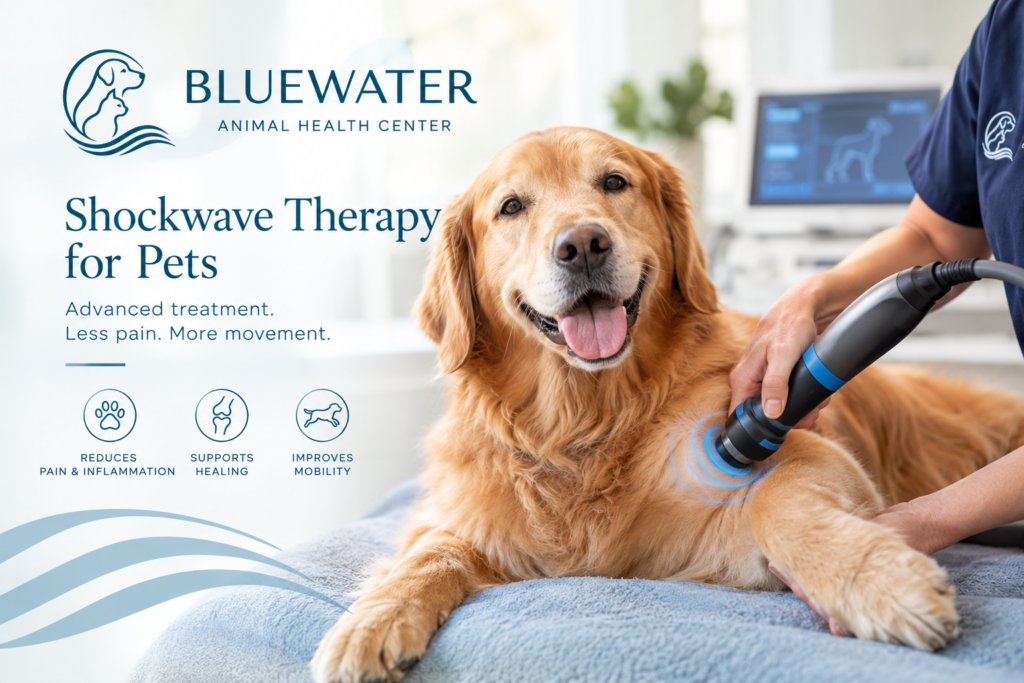 At Bluewater Animal Health Center, our approach to pain management reflects the same philosophy that guides every appointment: listen carefully, assess thoroughly, and provide clear answers. Dr. Alex Emerson brings a background that few small animal veterinarians can claim, with over 15 years managing orthopedic conditions in performance horses before transitioning to companion animal care. That depth of experience in musculoskeletal medicine is now applied directly to helping dogs and cats in Fort Lauderdale live with greater comfort and a higher quality of life. As part of our mobility and comfort care program, shockwave therapy is a meaningful addition to our treatment toolkit.
What Is Shockwave Therapy and How Does It Work
Shockwave therapy, formally known as extracorporeal shockwave therapy (ESWT), uses high-energy acoustic pressure waves delivered through the skin to the affected tissue. These sound waves create mechanical stimulation at a cellular level, triggering a cascade of biological responses that includes increased blood flow, release of growth factors, reduced inflammation, and accelerated tissue repair. Research published through the National Institutes of Health has documented ESWT’s use across a range of musculoskeletal conditions in dogs, including elbow, stifle, and hip osteoarthritis, as well as shoulder tendinopathies.
It is worth noting that shockwave therapy is a fundamentally different technology from laser therapy. While both modalities are used in pain management and healing, they work through entirely different mechanisms — and understanding that difference matters when choosing the right treatment for your pet.
Conditions That May Benefit From Shockwave Therapy
Shockwave therapy has a broad range of applications in veterinary medicine. Our team evaluates each patient individually to determine whether shockwave therapy is appropriate and how it fits into a comprehensive treatment plan. Our veterinary services include multiple modalities that can be combined with shockwave therapy for the best possible outcomes. Conditions that may be addressed include:
Each condition responds differently to treatment, and protocols are customized based on your pet’s size, species, and the specific area being treated.
Our Approach to Pain Management at Bluewater Animal Health Center
Dr. Emerson’s background in equine medicine shaped his understanding of how arthritis and orthopedic decline progress over time and how much can be done when intervention begins early. He applies that same proactive philosophy to his small animal patients, emphasizing thorough orthopedic evaluation at annual and semi-annual wellness visits, objective monitoring of mobility changes over time, and early access to treatment options like shockwave therapy before pain becomes severe.
For patients recovering from orthopedic surgery, shockwave therapy may be incorporated into the recovery plan to help minimize post-operative pain and swelling. For patients managing degenerative arthritis, it becomes part of a longer-term strategy that may also include weight management, targeted nutrition, exercise planning, and joint injections when appropriate. For senior pets in particular, who may be managing multiple sources of discomfort simultaneously, having access to a non-drug option that can reduce reliance on long-term pharmaceuticals is a meaningful advantage.
What to Expect at Your Pet’s Shockwave Appointment
Your pet’s first visit begins with a physical examination and a conversation about their history, current symptoms, and how those symptoms have changed over time. Dr. Emerson will confirm whether shockwave therapy is appropriate and outline a recommended treatment protocol. If your pet is a good candidate, treatment can often begin the same day.
After treatment, your pet can go home and resume normal activity, as there is no recovery period required. Some pets may experience mild soreness in the treated area for 24 to 48 hours, which is a normal response as the tissue begins to respond to treatment. You will be asked to monitor your pet in the days that follow and share any changes so the team can adjust the approach as needed.
Shockwave Therapy at Bluewater Animal Health Center in Fort Lauderdale
Bluewater Animal Health Center is building a veterinary clinic in Fort Lauderdale that takes pain management seriously, not as a last resort, but as an integrated part of keeping pets active, comfortable, and engaged throughout their lives. Dr. Alex Emerson’s philosophy is grounded in clear communication and individualized care, and adding shockwave therapy to our capabilities is a direct reflection of that commitment to innovation and quality.
If your dog or cat is showing signs of arthritis, recovering from orthopedic surgery, or struggling with chronic pain, we encourage you to ask whether shockwave therapy might help. Contact us to schedule a consultation and get a clear answer about your pet’s options.
